
Norway on a Budget vs. Norway in Luxury: What Actually Changes
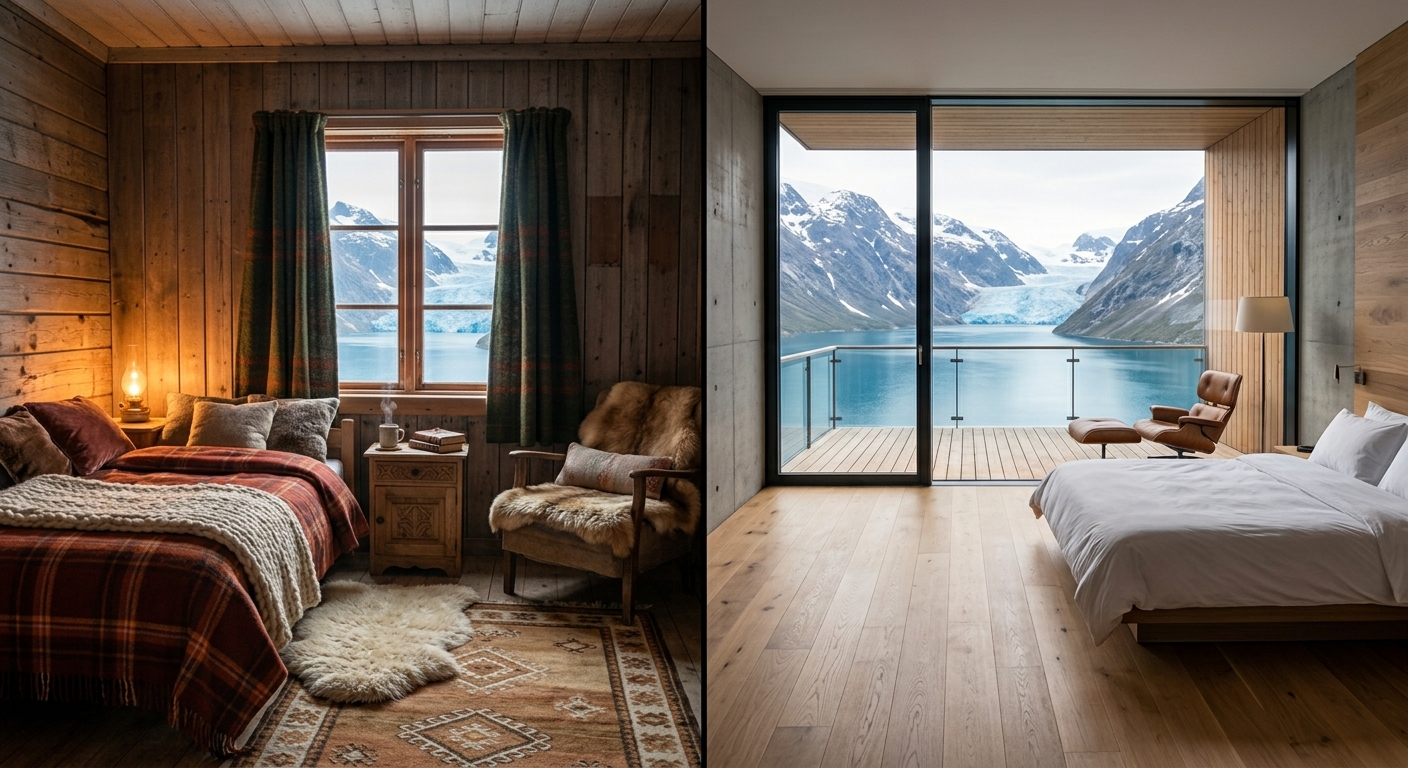
- Accommodation and food are where budget and luxury diverge hardest — activity pricing barely moves between tiers, since most guided experiences have one quality level, not three.
- A realistic 7-day trip runs roughly 12,000–16,000 NOK per person at the budget end and 35,000 NOK+ at the luxury end — the gap is almost entirely rooms, transport class, and privacy.
- Private guiding is the one category where spending more buys a genuinely different experience, not just a nicer version of the same one.
- Shoulder-season travel (May, September) closes much of the budget-luxury gap automatically.
- The category that scales worst with money: weather. No amount of luxury spending buys you a clear sky for aurora viewing.
Where the money actually goes
Ask "how much does Norway cost" and you'll get answers from 8,000 NOK to 60,000 NOK for what sounds like the same week. That range isn't dishonest — it's just describing completely different trips wearing the same label. The number that actually matters isn't the total. It's which line items move when you spend more, and which ones don't move at all no matter what you pay.
Four categories make up a Norway trip: transport, accommodation, food, and activities. Only two of them — accommodation and, to a lesser degree, transport — actually scale with budget in a way that changes the experience. The other two are far flatter than most people assume before they price out a trip.
The category-by-category breakdown
Accommodation is where the range is widest and most consequential — a budget hostel bed in Oslo runs 500–700 NOK a night; a design hotel or fjordside lodge runs 2,500–5,000 NOK. This is also the category where "luxury" buys something real: a private balcony over a fjord is a different experience than a shared dorm, not just a nicer version of the same room.
Transport scales less dramatically than people expect. The Bergen Railway costs roughly the same whether you book standard or first class — the difference is seat width and a quieter carriage, not a different train or a different view.
Food has real range but less than accommodation — a casual meal runs 150–250 NOK, a nice dinner 400–700 NOK.
Activities are the flattest category of all. A guided glacier hike costs roughly the same whether you book it through a budget operator or a five-star concierge. The one real upgrade available is private guiding instead of a scheduled group departure, which changes pace and flexibility, not the fundamental activity.
Where spending more actually buys a different trip
Private guiding is the clearest example. A scheduled group glacier hike moves at a pace set for the group; a private guide moves at your pace, adjusts the route to your interests, and answers questions a group tour doesn't have time for. That's a genuinely different experience, not a nicer version of the same one.
Private fjord cruises work the same way — a scheduled public ferry and a private boat see the same fjord, but only one of them can stop where you want, when you want. If you're deciding where to spend a luxury budget rather than spreading it evenly, privacy and flexibility are where it does the most.
- Bring your own quality outdoor gear rather than renting repeatedly — rental fees across a multi-activity week add up fast
- A refillable water bottle — tap water is excellent and free everywhere in Norway
- Groceries over restaurants for at least a few meals — supermarket prices are far closer to "normal" than restaurant prices
- Shoulder season (May, September) narrows the budget-luxury gap automatically — peak pricing is the single biggest lever
- Decide where luxury actually matters to you before booking — spreading a big budget evenly buys less than concentrating it on 1–2 things that change the experience
- Alcohol is taxed heavily and expensive everywhere — factor this in separately if it matters to your trip