
The Complete Guide to Adventure Travel in Norway
- Four disciplines, four regions: glacier hiking (Hardanger, Jostedalsbreen), via ferrata (Hardanger, Møre og Romsdal), white water (Sjoa river), multi-day trekking (Jotunheimen).
- A guided full-day glacier hike runs 1,000–1,400 NOK per person. Via ferrata sessions run 900–1,300 NOK. Both are guide-mandatory.
- Hardanger is the only region with all three headline activities within an hour's drive of each other.
- Season is June to September. Book 4–6 weeks ahead in July and August; guiding capacity is the actual bottleneck.
- Fitness bar: comfortable walking 10–15km on uneven ground covers glacier hiking and trekking. Via ferrata needs a level head at height, not strength. Rafting needs confident swimming.
Why Norway, specifically
Norway has over 1,600 glaciers and a coastline cut by more than a thousand fjords, with terrain that climbs from sea level past 2,000 meters within a few kilometers. The guiding companies, mountain huts, and rescue infrastructure exist because that terrain demanded them, not because someone built a tourism product. That's why the systems here are mature: the risk was always real, so the way it's managed had to be too.
The four disciplines
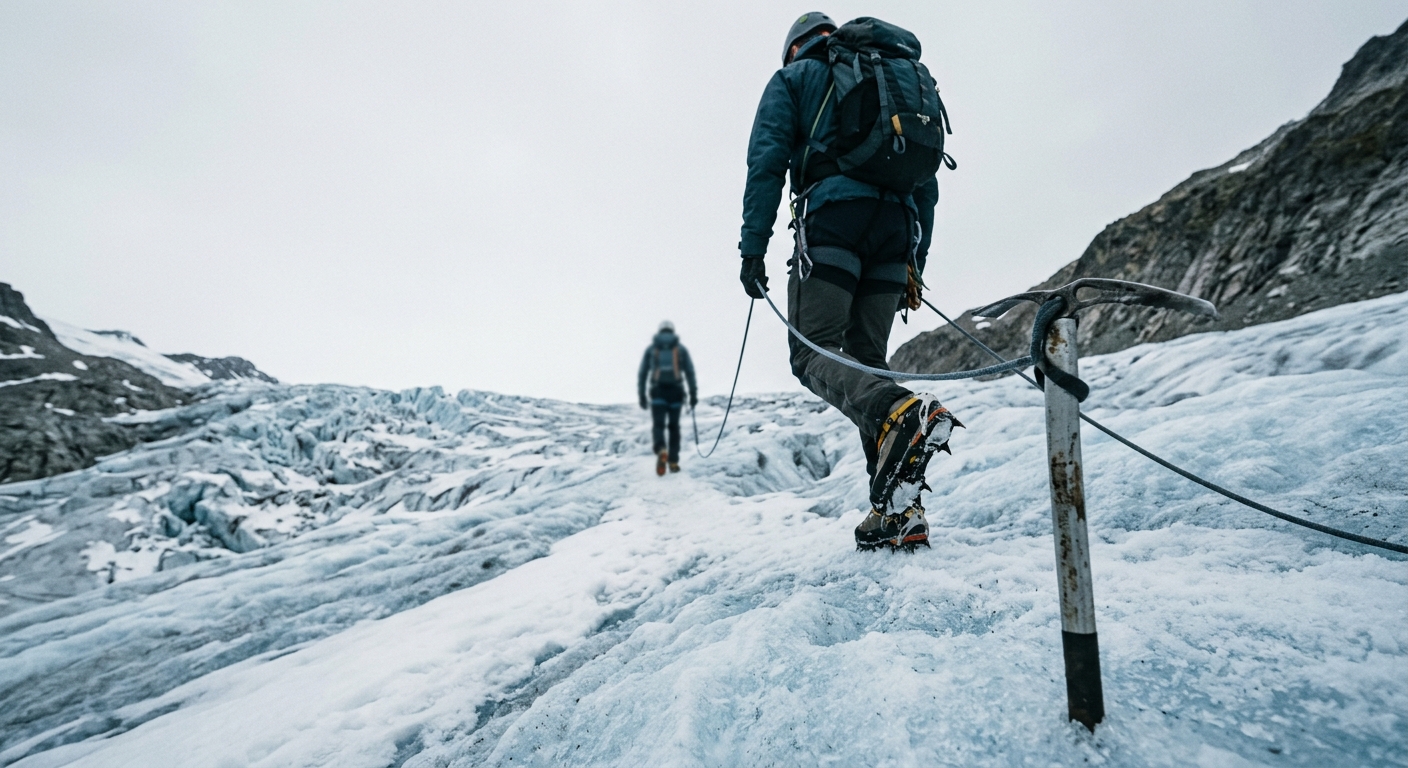
Glacier hiking is a guided walk across the ice using crampons, and ice axes on steeper routes. Folgefonna, in Hardanger, is the most accessible major glacier for a day trip. Jostedalsbreen, mainland Europe's largest glacier, has longer, harder routes further north. Guide-only — the ice shifts and crevasses open without warning.
Via ferrata — steel cables and rungs fixed into rock — lets hikers with zero climbing background cross terrain that would otherwise need real skill. Norway's routes sit on fjord walls in Hardanger and Møre og Romsdal, where a 3–5 hour session ends with a straight drop to the water below your feet. Graded by exposure, not fitness.
White water runs through the Sjoa river in Oppland, Norway's established rafting center, graded from family-friendly to advanced. Sea kayaking in the fjords is calmer and separate — an endurance sport, not a technical one — with Lofoten and Hardangerfjord the two most-booked regions.
Multi-day trekking is the one discipline you can do unguided. DNT, the Norwegian Trekking Association, maintains a hut-to-hut network in Jotunheimen and Hardangervidda. Different trip entirely from the single-day guided activities — this is for travelers who want six days in the mountains, not six hours.
The fitness bar, honestly
Instruction is included in every guided activity above — nobody expects you to already know how to use crampons. What actually varies is stamina. A full glacier day means 4–7 hours on your feet, often on uneven ice, with a demanding approach before you reach the glacier. If you can walk 10–15km over broken ground in a day without struggling, you clear the bar for everything on this list. Via ferrata asks for a level head at height more than strength. Rafting asks that you're a confident swimmer and nothing else.
When to go, and why the calendar is tight
June through September, full stop. Glacier and via ferrata routes open in early-to-mid June once snow load clears, and several via ferrata routes close by mid-September as conditions turn. July and August have the most stable weather and the longest daylight — which matters when an activity runs 6+ hours — but that's also when guiding capacity gets booked out. The constraint on this trip is never the weather. It's whether a guide has a slot.
Guides and permits aren't optional
Glacier hiking and via ferrata are guide-mandatory in practice: insurers exclude unguided glacier travel, and several glaciers sit inside national parks where independent access is explicitly restricted. Rafting operators must hold Norwegian Rafting Association certification. If you're booking a fully assembled trip, this is handled before you land. If you're piecing one together yourself, confirm certification before you pay.
- Layer, don't bulk up — a base layer, insulating mid layer, and waterproof shell beats one thick coat
- Real hiking boots, broken in before the trip — blisters on day one of a multi-activity week ruin everything after
- Sunglasses rated for snow glare, even in summer — reflected UV off ice and water is stronger than people expect
- Book activities 4–6 weeks ahead in July/August — guide availability, not interest, is the real constraint
- Travel insurance that explicitly covers glacier travel and via ferrata
- Don't schedule a glacier hike and via ferrata on back-to-back days if it's your first time doing either; the fatigue compounds