
How to See the Northern Lights: Realistic Odds, Best Locations, Best Months
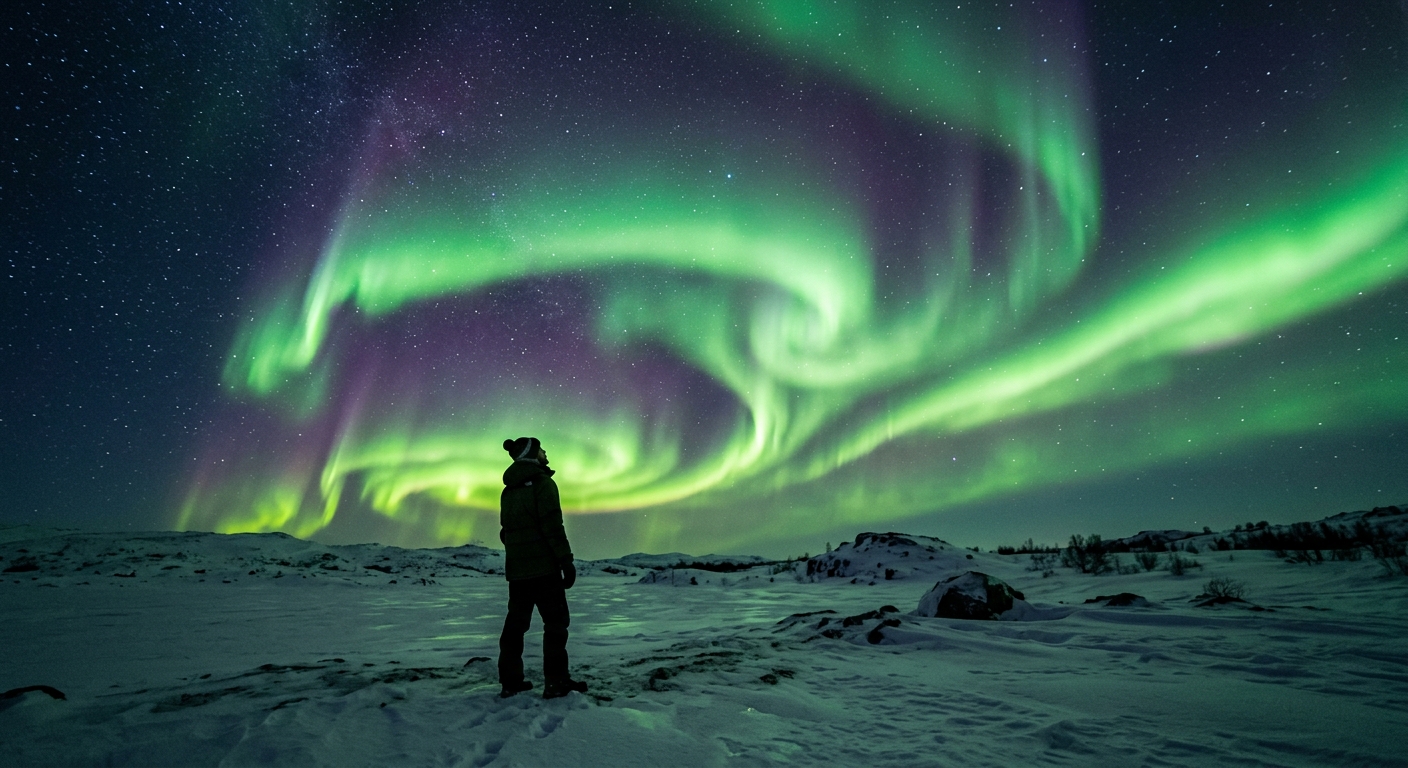
- The aurora is only visible in darkness, which means October through March in northern Norway. The equinoxes (September and March) tend to see elevated geomagnetic activity.
- You need three things: darkness, clear skies, and solar activity. You control only one — your location and timing. The other two are weather and the sun.
- Tromsø is the most practical base, but Alta offers statistically clearer skies. Svalbard offers polar night but at a significant logistical cost.
- A single dedicated night-out with a guide substantially improves odds over waiting from a hotel window. Guides monitor forecasts hourly and drive to clear sky.
- Plan for 3–5 nights minimum. Aurora hunting is a numbers game — more nights means more chances to catch a clear-sky, active-sky combination.
What actually determines whether you see it
The aurora isn't a feature of northern Norway the way mountains or fjords are — it's a weather event, invisible some nights and overwhelming on others, and no one can predict it reliably more than a day or two out. Three things need to align: a dark sky (you need actual night, which is absent in Norway from May through July), clear weather (cloud cover blocks everything), and solar activity (geomagnetic storms from the sun produce the light).
Of these three, you control the first by traveling in winter. The second and third are entirely outside your control, which is why chasing the aurora productively means building in multiple nights and being willing to drive to find clear sky rather than waiting for it to come to you.
The best bases
All of these locations sit inside or near the auroral oval — the ring around the magnetic north pole where aurora activity is most frequent. The practical differences are about cloud cover, accessibility, and what the trip looks like beyond the lights.
When to go
October through March is the core window. The equinoxes — late September and mid-March — are when geomagnetic activity peaks, giving slightly better odds if you can time around them. February and early March combine reasonable aurora odds with slightly more daylight and milder temperatures than December and January.
December and January give the deepest winter experience and the longest dark windows for aurora viewing, but also the coldest temperatures and the fewest daylight hours. If you're new to this, February is the most balanced month.
Why a guided night out matters
A guided aurora tour doesn't just give you transport — it gives you a guide who is monitoring multiple weather forecasts, checking satellite imagery, and making real-time decisions about where to drive based on where the cloud is likely to clear. That's the actual value. A guide who has been doing this for a decade in one region knows the micro-climate patterns of that area in a way that no forecast app replicates.
Waiting from a hotel or cabin window means you're anchored to wherever the cloud is over your specific location. A guide means the whole region is your search radius.
- Gear rated for standing still at -15°C — standing outside for 2 hours watching the sky is colder than any activity
- Insulated, waterproof boots — feet go first
- Hand warmers as backup — battery life on cameras also drops fast in cold air
- Plan for 3–5 nights minimum — more nights means more chances to catch the combination you need
- Book a guided tour for at least one night rather than relying solely on viewing from accommodation
- Set realistic expectations: a dramatic aurora is extraordinary, not typical; even a moderate display from the Arctic is worth the trip